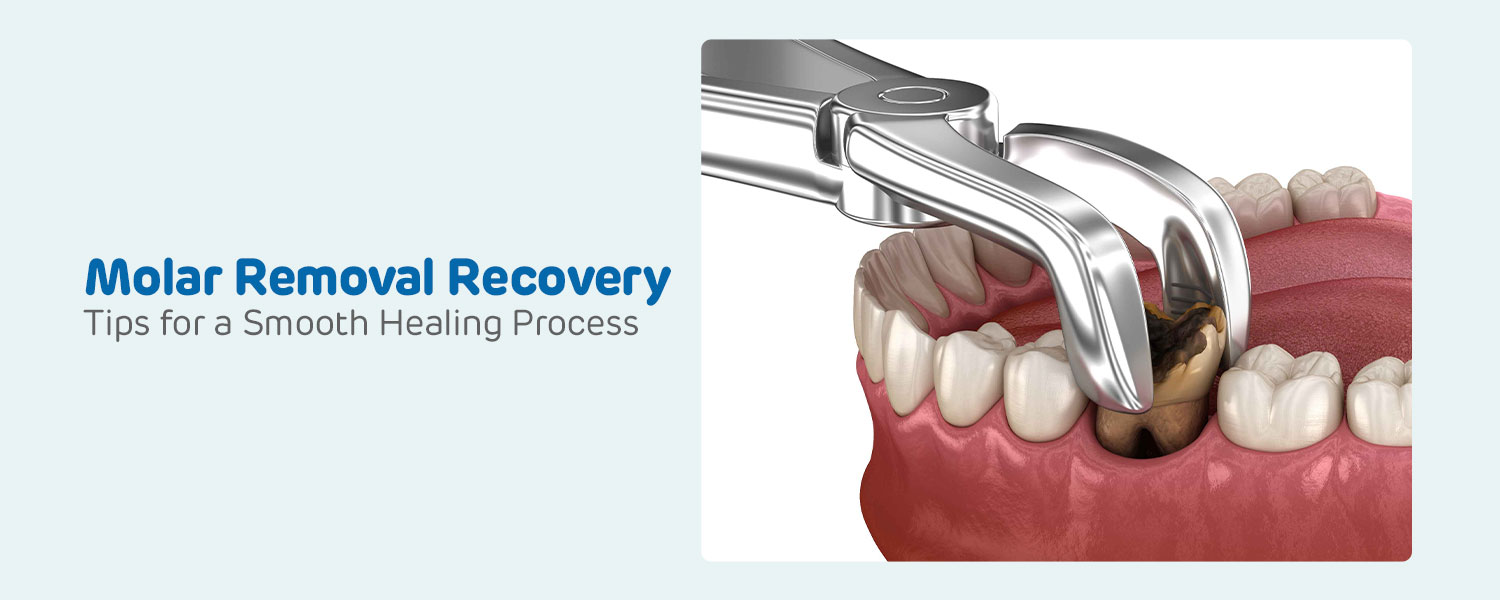

Having a molar out is one of the more common dental procedures, but how you look after yourself in the days afterwards makes a real difference to how comfortable your recovery is. Good aftercare lowers your risk of complications like dry socket and infection, and helps the extraction site heal the way it’s meant to.
No two recoveries look exactly the same. How quickly you heal depends on things like how complex the extraction was, your general health, and how closely you stick to your dentist’s instructions. Knowing what’s normal — and what’s not — takes a lot of the guesswork out of the process.
Below, we’ve covered the healing process, what to expect week by week, aftercare do’s and don’ts, what to eat, and the warning signs worth taking seriously. If anything comes up during your recovery, the team at Miranda Dental Centre is here to help.
What Happens After a Molar Removal?
-
The healing process, step by step
As soon as your molar is out, your body gets to work. A blood clot forms in the socket almost immediately — this clot protects the bone and nerve underneath and gives new tissue somewhere to grow from. It’s the single most important part of early healing, which is why so much of the aftercare advice below is really about protecting that clot.
Over the first few days, your gums will start closing over the socket. The bone underneath keeps rebuilding for months after that, well after you’ve stopped thinking about the extraction day-to-day.
-
Why aftercare actually matters
Skipping aftercare doesn’t just slow healing down — it’s the main reason people end up back in the dental chair with dry socket or an infection. The good news is that the things that matter most are simple: don’t disturb the clot, keep the area clean, and follow whatever your dentist has told you specifically for your case.
Common Symptoms During Molar Removal Recovery
Most people experience mild symptoms after a molar extraction, which gradually improve over the first week. Common symptoms include:
- Mild pain or discomfort once the anaesthetic wears off.
- Swelling around the extraction site, often peaking within two to three days.
- Minor bleeding or pink-tinged saliva during the first 24 hours.
- Jaw stiffness caused by temporary inflammation.
- Sensitivity when eating or drinking.
- Temporary difficulty opening the mouth fully.
These symptoms are usually part of the normal healing process. However, worsening pain or swelling should always be discussed with your dentist.
Recovery Timeline: What to Expect Week by Week
-
First 24 hours
This is all about the blood clot. Bite down gently on the gauze your dentist gives you, rest, and skip anything strenuous. Some bleeding and swelling is expected.
-
Days 2–3
Swelling typically peaks here before starting to settle. Pain should be manageable with whatever your dentist has recommended.
-
Days 4–7
The gums keep healing and most people are back to their normal routine, gradually reintroducing firmer foods as advised.
-
Long-Term Healing
The gums might look and feel healed within a few weeks, but the bone underneath is still rebuilding for several months. That’s completely normal — you won’t notice it happening, but it’s still going on.
Looking After Yourself: What to Do
-
Rest properly.
Skip the gym and heavy lifting for the first couple of days. Physical exertion raises your blood pressure, which can restart bleeding.
-
Use ice, correctly.
An ice pack on the outside of your cheek for the first 24 hours helps keep swelling down. Twenty minutes on, twenty minutes off is the general rule — check the timing your dentist gives you, as it can vary.
-
Drink water, skip the straw.
Staying hydrated helps your body heal, but the suction from a straw can dislodge the blood clot. Sip normally instead.
-
Stick to your dentist’s plan.
Take any medication exactly as prescribed, turn up to follow-up appointments, and follow whatever specific instructions you were given — extraction cases vary, and your instructions may differ from a friend’s.
What Not to Do After a Tooth Extraction
Certain habits can interfere with healing and increase the risk of complications. During the first few days, avoid:
- Smoking or vaping.
- Drinking through a straw.
- Vigorous rinsing.
- Touching the extraction site with your fingers or tongue.
- Heavy exercise.
- Very hot foods and beverages.
Protecting the blood clot during these early stages is one of the most important steps for a smooth recovery.
What to Eat While You’re Healing
Good options:
- Yoghurt
- Mashed potato
- Smoothies (spoon, not straw)
- Scrambled eggs
- Soup, once it’s cooled to lukewarm
Best avoided:
- Anything crunchy
- Sticky foods
- Spicy food
- Hard nuts
- Chips and crackers
Your dentist will let you know when it’s safe to work your way back to your normal diet — for most people, that’s a gradual process over two to four weeks rather than a single switch-over day.
How to Keep Your Mouth Clean After a Molar Extraction
Oral hygiene doesn’t stop just because you’ve had a tooth out — but it does need a lighter touch near the extraction site for the first few days.
-
Brushing Your Teeth Safely
You can usually brush the same day, unless your dentist tells you otherwise. Use a soft brush and go gently, avoiding direct contact with the socket until it’s had a few days to start closing.
-
Saltwater rinses.
After the first 24 hours, warm saltwater rinses — a few times a day, especially after meals — help keep the area clean without disturbing the clot the way vigorous rinsing or mouthwash can.
-
Maintaining Good Oral Hygiene
Keep brushing and flossing your other teeth as normal. Neglecting the rest of your mouth just adds bacteria to an area that’s already trying to heal.
Dry Socket: What It Is and How to Avoid It
Dry socket happens when the blood clot comes away too early or never properly forms, leaving the bone and nerve underneath exposed. It’s painful, it delays healing, and it’s also one of the most preventable complications on this list.
To lower your risk:
- Don’t smoke or vape
- Skip the straw
- Avoid vigorous rinsing
- Follow your aftercare instructions closely
- Take medication as prescribed
If you do end up with dry socket, it’s treatable — but it needs a trip back to your dentist, not home remedies.
When Should You Contact Your Dentist?
Most recoveries are straightforward, but get in touch straight away if you notice:
- Pain that’s severe or getting worse rather than better
- Bleeding that won’t ease off
- Pus, ongoing swelling, or a persistent bad taste — signs of possible infection
- A fever, or swelling that isn’t improving after a few days
- Trouble swallowing or breathing
How Miranda Dental Centre Supports Your Recovery
Every extraction is different, so the aftercare advice we give is tailored to your specific procedure — not a generic handout. Dr. Abhay Kohli personally calls higher-complexity extraction patients 48 hours after their procedure to check in
If you need a follow-up appointment or something doesn’t feel right during healing, our team is on hand to take a look and answer your questions. Beyond extractions, we offer a full range of preventive, restorative, and general dental care to keep your smile in good shape long after you’ve healed.
Conclusion
Recovering from a molar removal is usually a straightforward, if slightly uncomfortable, couple of weeks. Protect the blood clot, keep the area clean, stick to soft foods early on, and follow your dentist’s specific instructions — that combination covers most of what determines a smooth recovery.
Just as important is knowing when something isn’t normal. Severe pain, heavy bleeding, or swelling that keeps getting worse are all reasons to call rather than wait. Catching a problem early is almost always easier to treat than one that’s been left for a few days.
If anything comes up after your procedure, Miranda Dental Centre is here to help — get in touch and we’ll take it from there.
Frequently Asked Questions
How long does it take to recover from a molar removal?
Most people feel back to normal within one to two weeks, though the bone underneath keeps healing for several months.
Can I eat after a molar extraction?
Yes — once the numbness has worn off, start with soft foods and work your way back to your normal diet as your dentist advises.
When can I brush my teeth after a tooth extraction?
Usually the same day, but go gently and avoid the extraction site directly for the first few days.
What are the signs of dry socket?
Pain that gets worse a few days after the extraction (rather than better), a bad taste or smell, and a socket that looks empty rather than filled with a clot. Call your dentist if you notice any of these.

About the Author
Dr. Abhay Kohli – Principal Dentist, Miranda Dental Centre
Dr. Abhay Kohli is an experienced and gentle dentist with a special interest in Implants, Orthodontics, and Sleep Dentistry. He holds advanced training in implantology, orthodontics, and TMJ care, and is a member of ADA, ICOI, and AADSM. He sees patients full-time, including weekends, at Miranda Dental Centre.
Disclaimer: This blog is for educational purposes only and does not replace professional dental or medical advice. Results vary for each patient. Please consult a qualified dental or healthcare professional before making decisions about your treatment. Don’t delay or ignore professional care based on this information.